Introduction
ST-elevation myocardial infarction (STEMI) poses urgent challenges in diagnosis that can significantly impact patient survival. Health tech developers need to grasp the nuances of STEMI diagnosis, as it presents a crucial chance to improve patient outcomes with innovative technology. Developers face significant hurdles, including:
- Misinterpreting ECG results
- Integrating advanced diagnostic tools
How can they navigate these complexities to ensure timely and precise identification of STEMI in clinical settings? Addressing these challenges is essential for developers aiming to improve diagnostic accuracy and patient care.
Understand STEMI: Key Characteristics and Symptoms
ST-elevation myocardial infarction (STEMI) poses a critical challenge in emergency medicine due to its life-threatening nature and the urgency required for effective treatment. Key characteristics of STEMI include:
-
Symptoms: Common symptoms associated with STEMI are:
- Chest pain or discomfort, often described as pressure or squeezing.
- Pain radiating to the left arm, neck, jaw, or back.
- Shortness of breath, which may occur with or without chest discomfort.
- Additional signs may include sweating, nausea, or lightheadedness.
ECG Changes: The definitive indicator of ST-segment elevation observed on a 12-lead ECG signifies transmural myocardial injury. A diagnosis is confirmed when:
- There is greater than 1 mm of ST elevation in two contiguous leads.
- Reciprocal ST segment depression is noted in opposite leads.
Recent studies indicate that 58% of patients reviewed had confirmed STEMI, emphasizing the importance of understanding how to diagnose STEMI accurately, while 42% were false alarms. In Canada, the incorporation of advanced diagnostic tools from Neural Cloud Solutions Inc. is crucial, as timely intervention can significantly reduce mortality risk. Delays in treatment exceeding 90 minutes can increase the risk of death by approximately three times.
The company's continuous learning model boosts ECG analysis accuracy and efficiency with AI-driven automation, tackling challenges like physiological variability and signal artifacts. By utilizing advanced noise reduction and artifact management, the system transforms noisy recordings into detailed insights. This enables developers to create effective diagnostic tools that can accurately demonstrate how to diagnose STEMI in clinical settings. Additionally, Insight360 serves as a customizable visualization and reporting tool that transforms clean ECG data into interactive dashboards and clinical-ready reports. Integrating AI models, which have demonstrated the ability to accurately recognize heart attack cases, can further improve diagnostic capabilities and assist clinical judgment. Expert endorsements from Dr. Alan Rabinowitz, Dr. Brett Heilbron, and Dr. Marc W. Deyell highlight that the precision of this technology rivals human interpretation, making it an invaluable asset in the battle against heart attacks. Furthermore, it is important to note that MaxYield is currently pending FDA Class II SaMD clearance, ensuring compliance with regulatory standards. With the potential for AI-driven tools to enhance diagnostic accuracy, healthcare professionals can make more informed decisions, ultimately saving lives in critical situations.

Gather Essential Tools for STEMI Diagnosis
To understand how to diagnose STEMI effectively, one must utilize a combination of advanced tools and technologies to overcome common challenges in ECG analysis. To effectively diagnose STEMI, health tech developers should gather the following essential tools:
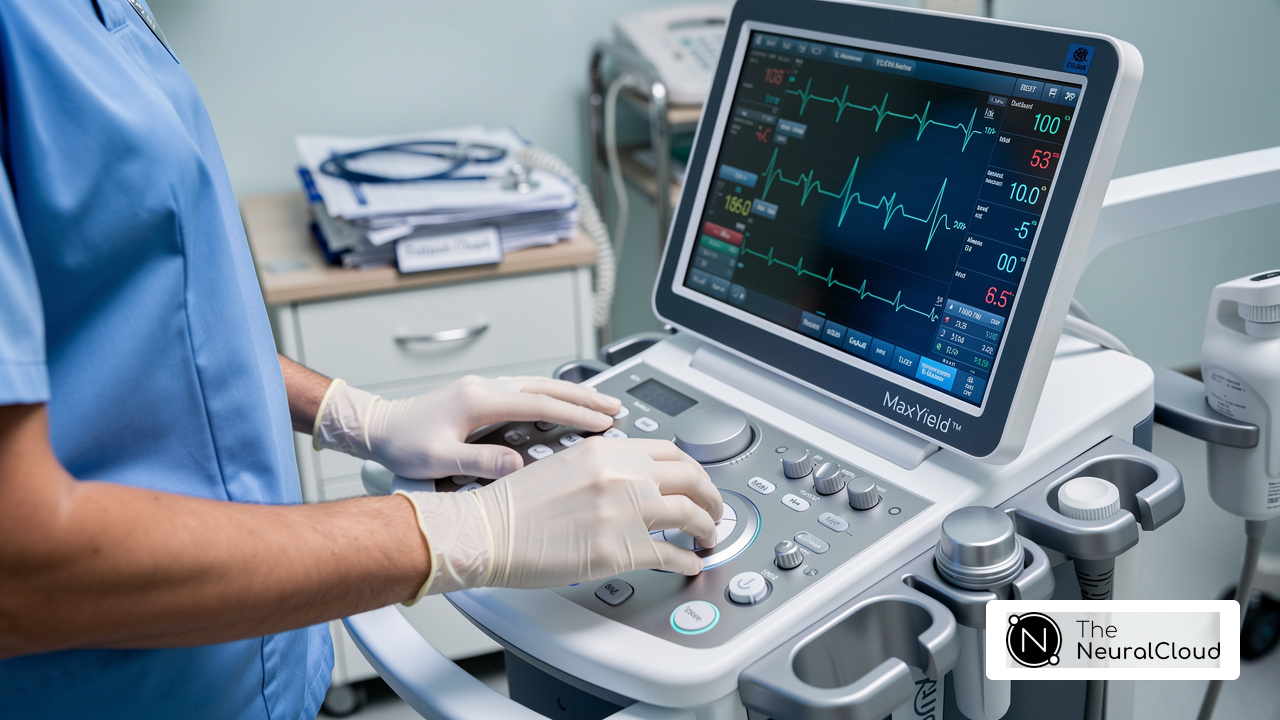
- 12-Lead ECG Machine: The cornerstone of STEMI diagnosis, a high-quality 12-lead ECG machine is essential for capturing accurate readings. In Canadian hospitals, these machines maintain a diagnostic accuracy rate of approximately 80% for various cardiac conditions. Using advanced AI models like the Queen of Hearts can boost this precision, offering 2× greater sensitivity than traditional methods and reducing false positives by 81% compared to standard heart attack pathways. Furthermore, incorporating MaxYield™ from Neural Cloud Solutions Inc. can provide hospital-grade accuracy from consumer-grade patches, ensuring reliable data for effective diagnosis.
- Cardiac Biomarker Testing Kits: These kits are crucial for measuring troponin levels and other biomarkers indicative of heart muscle damage. Increased troponin levels are a strong sign of a heart attack, supporting the need for rapid testing alongside ECG analysis.
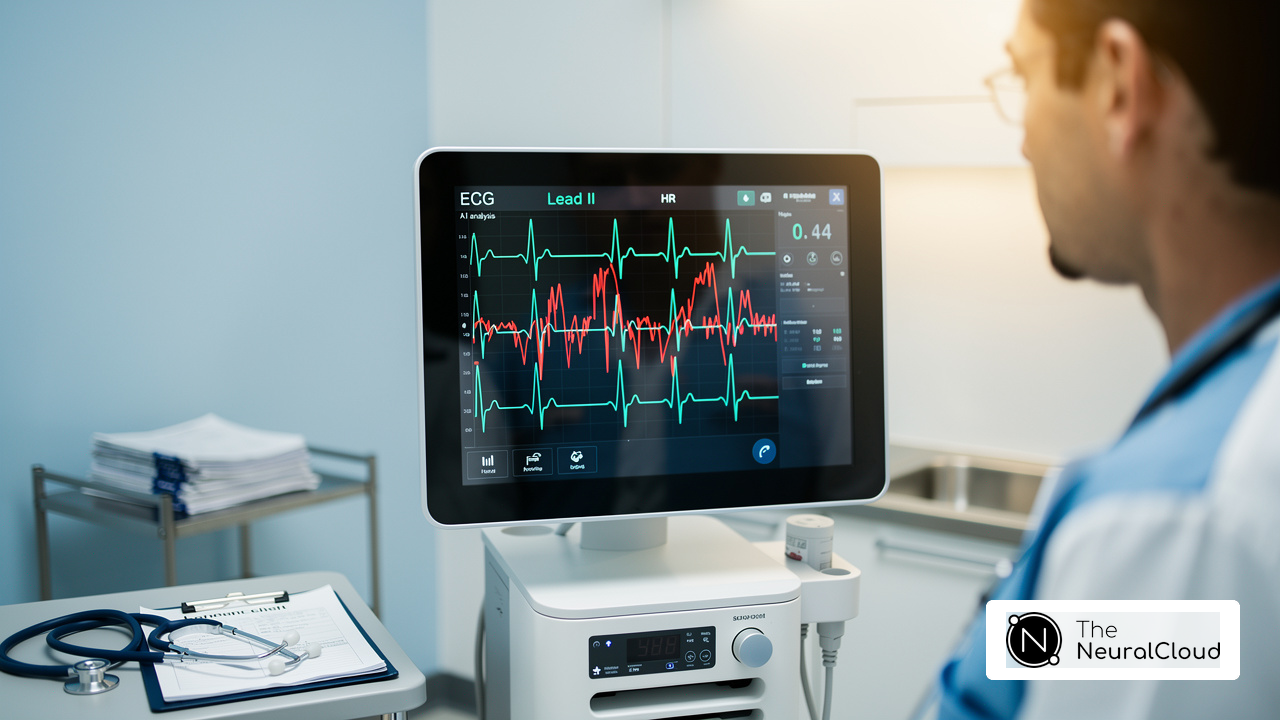
- Software for ECG Analysis: Advanced software solutions are essential for analyzing ECG data, identifying ST-segment elevations, and offering real-time alerts for potential heart attack cases. The Queen of Hearts AI model is a clinically validated tool that improves ECG interpretation and greatly decreases false positives, tackling the critical issue where many cath lab activations for suspected heart attacks turn out to be unnecessary, leading to wasted resources and potential patient risks. Additionally, MaxYield™ provides automated ECG analysis that reduces noise and handles artifacts, turning unclear recordings into clear insights. This platform also presents unique metrics and premium subscription opportunities that can enhance diagnostic capabilities.
- Training Materials: Comprehensive training for all personnel involved in the diagnostic process is essential. This involves identifying STEMI symptoms and correctly interpreting ECG results, which can greatly influence outcomes for individuals.
- Data Management Systems: Implementing secure data management systems allows for efficient storage and retrieval of individual data. This facilitates easy access to ECG results and medical history, streamlining the diagnostic workflow. MaxYield™ also supports continuous monitoring without clinical hardware costs, providing a cost-effective solution for healthcare providers.
Collecting these tools helps developers build a strong framework for understanding how to diagnose STEMI, leading to better patient care and outcomes. For additional insights, consider utilizing Insight360, the customizable visualization and reporting tool that converts clean ECG data into interactive dashboards and clinical-ready reports. Contact Neural Cloud Solutions Inc. for free trials or personalized walkthroughs of MaxYield and Insight360.

Follow the Step-by-Step Diagnostic Process for STEMI
To diagnose STEMI effectively, follow this step-by-step process:
-
Initial Patient Assessment: Begin with a thorough clinical evaluation, including a detailed medical history and physical examination. Look for classic symptoms of STEMI, such as chest pain, shortness of breath, and atypical symptoms, especially in women.
-
Obtain a 12-Lead ECG: Ensure that a high-quality 12-lead ECG is recorded within 10 minutes of the individual's presentation. This is crucial for timely diagnosis, as studies indicate that rapid ECG acquisition significantly improves patient outcomes. Neural Cloud Solutions Inc.'s platform enhances this process with automated and precise ECG analysis. This ensures clarity and speed in interpreting waveforms.
-
Analyze the ECG: Review the ECG for ST-segment elevation. Confirm that there is:
- At least 1 mm of ST elevation in two contiguous leads.
- Reciprocal changes in opposite leads, which can further support the diagnosis. With each use, the MaxYield platform learns and adapts, making it easier to filter out noise and improve signal clarity for more accurate diagnoses.
-
Perform Cardiac Biomarker Testing: Collect blood samples to measure troponin levels. Increased troponin levels are vital signs of myocardial damage and are crucial for understanding how to diagnose STEMI, which improves diagnostic precision.
-
Consider Additional Imaging: If necessary, perform echocardiography or other imaging studies to assess heart function and rule out other conditions that may mimic STEMI.
-
Document Findings: Record all findings meticulously, including ECG interpretations and biomarker results, to ensure a comprehensive patient record that can guide treatment decisions. Utilizing Insight360, the customizable visualization and reporting tool, can transform MaxYield’s clean ECG data into interactive dashboards and clinical-ready reports.
-
Initiate Treatment Protocols: If a ST-elevation myocardial infarction is confirmed, initiate appropriate treatment protocols, such as reperfusion therapy, to restore blood flow to the heart. Prompt intervention is crucial, as delays can significantly affect outcomes for individuals.
By following this structured process and integrating the advanced capabilities of the system, developers can enhance the accuracy and efficiency of STEMI diagnosis in clinical settings, ultimately improving patient care and outcomes. Expert endorsements from Dr. Alan Rabinowitz, Dr. Brett Heilbron, and Dr. Marc W. Deyell highlight the precision of the product rivaling human interpretation and its noise reduction advantages. Additionally, it is important to note that the MaxYield platform is currently pending FDA Class II SaMD clearance, ensuring compliance with regulatory standards.

Troubleshoot Common Challenges in STEMI Diagnosis
Understanding how to diagnose stemi is crucial, as diagnosing a heart attack presents several challenges that can hinder timely and accurate patient care. Here are some troubleshooting tips:
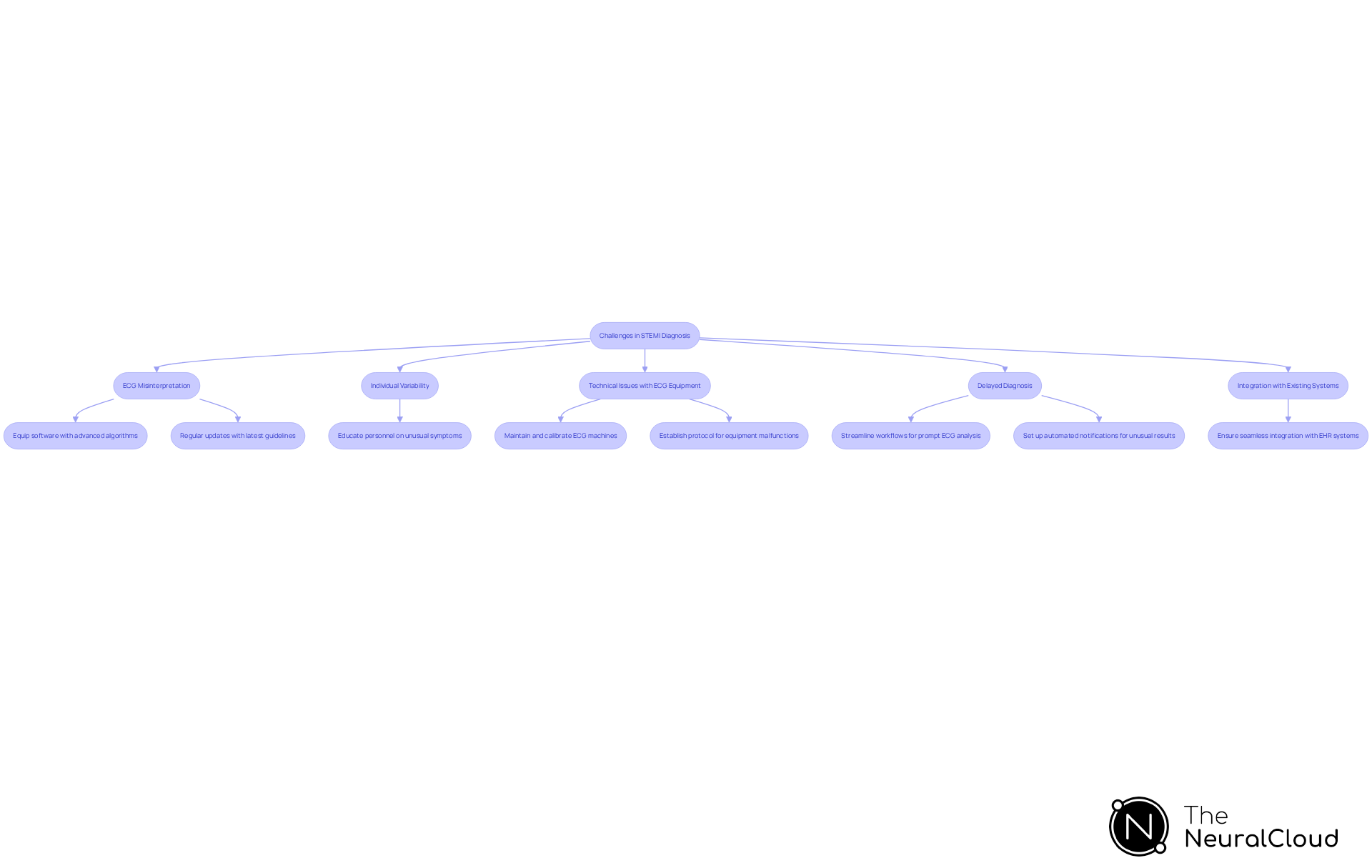
- ECG Misinterpretation: Equip the software used for ECG analysis with advanced algorithms to minimize false positives and negatives. Regular updates should incorporate the latest guidelines and research findings. Studies indicate that leading causes of false positive interpretations include ECG artifact and early repolarization, which can significantly impact diagnostic accuracy. Misinterpretation of ECG results can lead to critical delays in treatment, jeopardizing patient outcomes.
- Individual Variability: Symptoms can differ significantly among individuals, particularly in women and older adults. Educating personnel to identify unusual manifestations of myocardial infarction is essential, as 30-50% of individuals with blocked coronary arteries may not fulfill conventional myocardial infarction criteria upon arrival. This misclassification can result in postponed treatment, which is detrimental to patient health.
- Technical Issues with ECG Equipment: Keeping ECG machines well-maintained and properly calibrated is crucial for getting accurate readings. Establishing a protocol for resolving equipment malfunctions during patient evaluations can assist in reducing delays in diagnosis. Individuals with occlusive myocardial infarction who do not fulfill specific criteria often face extended wait times for coronary angiography, which can worsen their condition.
- Delayed Diagnosis: In heart attack cases, every second counts. Streamlining workflows to ensure that ECGs are performed and analyzed promptly is vital. Setting up automated notifications for unusual results can enable faster reactions, as determining a heart attack diagnosis within 20 minutes is linked to treatment durations under 90 minutes. Without timely diagnosis, patients may experience worsened conditions, leading to increased morbidity and mortality rates.
- Integration with Existing Systems: Ensure that new diagnostic tools integrate seamlessly with existing electronic health record (EHR) systems to facilitate data sharing and improve workflow efficiency. This integration is essential for enhancing the overall reliability of heart attack diagnostic solutions.
Tackling these challenges head-on can greatly boost the reliability and effectiveness of how to diagnose stemi.
Conclusion
For health tech developers, mastering the diagnosis of ST-elevation myocardial infarction (STEMI) is crucial to improving emergency medicine outcomes. Accurate diagnosis is urgent; timely intervention can greatly reduce mortality rates. Using advanced tools and technologies, developers can create effective diagnostic solutions that streamline the identification of STEMI, ultimately saving lives.
This article emphasizes the need to recognize STEMI symptoms, utilize high-quality 12-lead ECG machines, and integrate AI-driven analysis tools like MaxYield™ from Neural Cloud Solutions Inc. These resources not only improve diagnostic accuracy but also address common challenges such as ECG misinterpretation and individual variability in symptoms. Furthermore, the step-by-step diagnostic process outlined provides a clear framework for clinicians to follow, ensuring that critical steps are not overlooked.
In conclusion, the integration of advanced diagnostic tools and a structured approach to STEMI diagnosis is vital for improving patient care in Canada. Health tech developers are encouraged to adopt these practices and utilize resources like Insight360 to enhance their diagnostic capabilities. Embracing these advanced diagnostic practices can transform patient care and save lives across Canada.
Frequently Asked Questions
What is STEMI and why is it significant in emergency medicine?
ST-elevation myocardial infarction (STEMI) is a life-threatening condition that requires urgent treatment due to its critical nature. It poses significant challenges in emergency medicine.
What are the common symptoms of STEMI?
Common symptoms associated with STEMI include chest pain or discomfort (often described as pressure or squeezing), pain radiating to the left arm, neck, jaw, or back, shortness of breath (with or without chest discomfort), and additional signs such as sweating, nausea, or lightheadedness.
How is STEMI diagnosed using ECG?
STEMI is diagnosed through a 12-lead ECG, which shows ST-segment elevation. A diagnosis is confirmed when there is greater than 1 mm of ST elevation in two contiguous leads and reciprocal ST segment depression is noted in opposite leads.
What do recent studies indicate about the prevalence of STEMI?
Recent studies indicate that 58% of patients reviewed had confirmed STEMI, while 42% were false alarms, highlighting the importance of accurate diagnosis.
How does Neural Cloud Solutions Inc. contribute to the diagnosis of STEMI in Canada?
Neural Cloud Solutions Inc. incorporates advanced diagnostic tools that enhance the accuracy of ECG analysis through AI-driven automation, which helps address challenges like physiological variability and signal artifacts.
What is the impact of treatment delays on STEMI outcomes?
Delays in treatment exceeding 90 minutes can increase the risk of death from STEMI by approximately three times, emphasizing the need for timely intervention.
What role does Insight360 play in the diagnosis of STEMI?
Insight360 is a customizable visualization and reporting tool that transforms clean ECG data into interactive dashboards and clinical-ready reports, aiding in the diagnosis of STEMI.
How do AI models improve the diagnostic capabilities for STEMI?
AI models can accurately recognize heart attack cases, enhancing diagnostic capabilities and assisting clinical judgment, which can lead to more informed decisions in critical situations.
What endorsements support the technology used in diagnosing STEMI?
Expert endorsements from Dr. Alan Rabinowitz, Dr. Brett Heilbron, and Dr. Marc W. Deyell highlight that the precision of the technology rivals human interpretation, making it a valuable asset in combating heart attacks.
What is the regulatory status of MaxYield in relation to STEMI diagnosis?
MaxYield is currently pending FDA Class II SaMD clearance, ensuring compliance with regulatory standards for its diagnostic tools.
List of Sources
- Understand STEMI: Key Characteristics and Symptoms
- New study finds AI model improves heart attack detection (https://health.ucdavis.edu/news/headlines/new-study-finds-ai-model-improves-heart-attack-detection/2025/11)
- Comparative Analysis of Patients With STEMI and COVID-19 Between Canada and the United States - PMC (https://pmc.ncbi.nlm.nih.gov/articles/PMC10284462)
- North American COVID-19 ST-Elevation Myocardial Infarction (STEMI) Research Reveals Impact on Minority Populations, High Mortality and Atypical Symptoms | Minneapolis Heart Institute Foundation (https://mplsheart.org/news/north-american-covid-19-st-elevation-myocardial-infarction-stemi-research-reveals-impact)
- Nationwide Study Finds Significant Decline in Treatment for Heart Attacks During Pandemic | SCAI (https://scai.org/media-center/news-and-articles/nationwide-study-finds-significant-decline-treatment-heart-attacks)
- Gather Essential Tools for STEMI Diagnosis
- Queen of Hearts: AI ECG for STEMI & OMI (https://powerfulmedical.com/pmcardio-stemi)
- FDA Clears First AI-ECG Model for Acute MI Detection (https://tctmd.com/news/fda-clears-first-ai-ecg-model-acute-mi-detection)
- Powerful Medical's AI-Driven ECG Model for STEMI Detection Receives FDA Breakthrough Designation - MedPath Trial (https://trial.medpath.com/news/powerful-medical-s-ai-driven-ecg-model-for-stemi-detection-receives-fda-breakthrough-designation)
- theneuralcloud.com (https://theneuralcloud.com/post/comparing-12-lead-ecg-machines-and-portable-devices-for-medical-offices)
- the-neural-cloud-3738ff.webflow.io (https://the-neural-cloud-3738ff.webflow.io/post/how-is-stemi-diagnosed-a-step-by-step-guide-for-health-tech-developers)
- Follow the Step-by-Step Diagnostic Process for STEMI
- STEMI: ST-segment Elevation Myocardial Infarction - The Cardiology Advisor (https://thecardiologyadvisor.com/ddi/stemi-st-elevation-myocardial-infarction)
- STEMI care 2021: Addressing the knowledge gaps - PMC (https://pmc.ncbi.nlm.nih.gov/articles/PMC8515361)
- STEMI Management: Quick Diagnosis & Effective Intervention (https://tricog.com/stemi-management-guide?srsltid=AU7gw4UjDkDBkNoBZa7A1B2PiuwbxUL4TGULHhUBn9nR8dNmsIq1QvVl)
- SCAI Publishes Expert Consensus Statement on Managing Patients with ST-Elevated Myocardial Infarction | SCAI (https://scai.org/media-center/news-and-articles/scai-publishes-expert-consensus-statement-managing-patients-st)
- Troubleshoot Common Challenges in STEMI Diagnosis
- The Mystery of the Missing STEMIs During the COVID-19 Pandemic (https://tctmd.com/news/mystery-missing-stemis-during-covid-19-pandemic)
- Article Bites #20: Computers as adjuncts to Humans: Causes of Prehospital misinterpretation of STEMI - NAEMSP (https://naemsp.org/2020-7-25-article-bites-20-computers-as-adjuncts-to-humans-causes-of-prehospital-misinterpretation-of-stemi)
- 50% of Heart Attacks Miss STEMI Criteria (https://powerfulmedical.com/pmcardio-stemi/50-of-heart-attacks-do-not-meet-classic-ecg-based-stemi-criteria)
- Causes of Prehospital Misinterpretations of ST Elevation Myocardial Infarction (https://tandfonline.com/doi/full/10.1080/10903127.2016.1247200)
- ST-segment Elevation Myocardial Infarction: Challenges in Diagnosis (https://uscjournal.com/articles/st-segment-elevation-myocardial-infarction-challenges-diagnosis?language_content_entity=en)