Introduction
Managing non-ST elevation myocardial infarction (NSTEMI) is fraught with challenges that require innovative solutions. Developers in health tech play a crucial role in improving patient outcomes by following the latest NSTEMI management guidelines that focus on early intervention and personalized treatment strategies. As standards evolve and technologies like Neural Cloud Solutions Inc.'s MaxYield™ are integrated, how can developers ensure their tools meet these guidelines and close care gaps? This article will delve into ten key NSTEMI management guidelines that developers should consider to enhance care delivery and clinical outcomes.
Neural Cloud Solutions: Transforming NSTEMI Management with MaxYield™
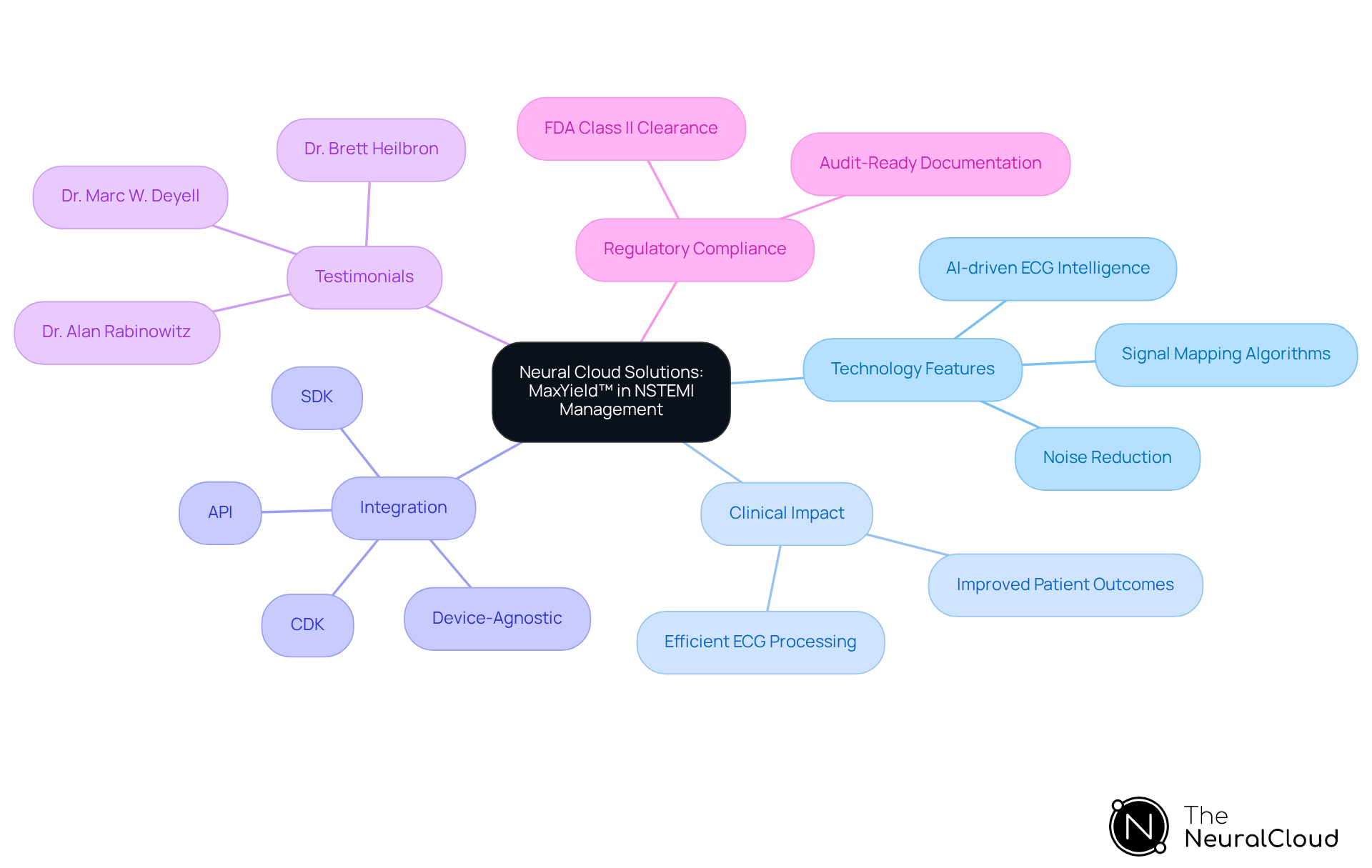
In the realm of cardiac care, following the nstemi management guidelines is paramount for addressing the complexities of non-ST elevation myocardial infarction and improving patient outcomes. Neural Cloud Solutions Inc. is leading the way in transforming care through its flagship product, MaxYield™, an advanced AI-driven ECG intelligence layer. This groundbreaking technology enhances ECG data quality by isolating and purifying noisy signals. This is crucial for accurate diagnosis and treatment of non-ST elevation myocardial infarction as outlined in the nstemi management guidelines. MaxYield uses patented signal mapping algorithms to deliver high-fidelity cardiac data. This empowers healthcare professionals to make informed decisions quickly.
MaxYield is device-agnostic and integrates seamlessly into existing workflows through API, SDK, or CDK. This allows efficient processing of ECG recordings from various devices without hardware changes. This capability simplifies patient oversight for non-ST elevation myocardial infarction in accordance with the nstemi management guidelines and improves overall clinical results, marking significant progress in cardiac care technology in Canada. Cardiovascular illnesses cause approximately 17.9 million deaths annually, highlighting the need for effective nstemi management guidelines for non-ST elevation myocardial infarction.
Testimonials from cardiologists like Dr. Alan Rabinowitz, Dr. Brett Heilbron, and Dr. Marc W. Deyell highlight the platform's effectiveness. They emphasize its precision, which rivals human interpretation, and its advanced noise reduction benefits. It's crucial for health tech developers to address challenges like clinician trust and liability concerns when integrating AI solutions into healthcare systems. With FDA Class II SaMD clearance pending and audit-ready documentation for GxP inspections, MaxYield is set to meet regulatory compliance. This solidifies its role in transforming digital health.
American College of Cardiology Guidelines: Key Updates for NSTEMI Management
The 2025 ACC/AHA NSTEMI management guidelines introduce critical updates that challenge traditional approaches to non-ST elevation myocardial infarction management. These guidelines highlight the significance of early risk assessment and customized treatment. Key recommendations according to the NSTEMI management guidelines include:
- The use of dual antiplatelet therapy for all NSTEMI cases.
- The implementation of an early invasive strategy for high-risk individuals.
They stress the importance of personalized education and consistent follow-up, which are crucial for achieving better long-term health outcomes.
It's essential for health tech developers to weave these guidelines into their solutions, ensuring compliance and improving care coordination. By leveraging Neural Cloud Solutions Inc.'s MaxYield platform, pending FDA Class II SaMD clearance, developers can boost ECG analysis efficiency. MaxYield enhances this process through automated labeling and data extraction, tackling issues like physiological variability and signal artifacts through advanced algorithms that enhance data accuracy.
Additionally, the Insight360 tool complements MaxYield by providing customizable visualization and reporting capabilities. Expert endorsements from Dr. Alan Rabinowitz, Dr. Brett Heilbron, and Dr. Marc W. Deyell highlight MaxYield’s precision, rivaling human interpretation while significantly reducing noise. This seamless integration of MaxYield not only supports adherence to the NSTEMI management guidelines but also paves the way for improved patient outcomes in cardiovascular care.

Cleveland Clinic Insights: Major Changes in NSTEMI Management Guidelines
Recent updates in the nstemi management guidelines emphasize the urgent need for improved ECG analysis methods. These updates emphasize advanced imaging techniques for accurate diagnosis and the importance of a multidisciplinary care approach. Prompt risk evaluation upon individual presentation is now a priority, with suggestions for healthcare teams to utilize technology to enhance communication and simplify decision-making processes. Regulatory compliance details, such as FDA Class II SaMD clearance-pending status, are crucial for ensuring the credibility of these advancements.
In this context, Neural Cloud Solutions Inc.'s MaxYield™ stands out with its advanced noise filtering and wave recognition capabilities, significantly enhancing ECG analysis. By automating repetitive tasks and processing data more efficiently, this technology aligns with the focus on accuracy and speed outlined in the nstemi management guidelines. Moreover, Insight360 acts as a customizable visualization tool, turning MaxYield’s clear ECG data into interactive dashboards and ready-to-use clinical reports.
Expert endorsements from Dr. Alan Rabinowitz, Dr. Brett Heilbron, and Dr. Marc W. Deyell further emphasize MaxYield's precision, rivaling human interpretation while reducing noise. These insights underscore the essential role of health tech developers in creating solutions that promote collaboration among healthcare providers and improve diagnostic accuracy, especially considering the focus on complete revascularization for individuals with multivessel acute coronary syndromes.

Long-Term Management Strategies for Unstable Angina and NSTEMI
Effective management of NSTEMI and unstable angina requires a multifaceted approach that addresses both medical and lifestyle factors, in accordance with the NSTEMI management guidelines. Long-term oversight necessitates lifestyle changes, medication adherence, and regular follow-up. Key components include:
- Antiplatelet therapy
- Statins
- Beta-blockers
These are essential for mitigating cardiovascular risk. For instance, studies indicate that beta-blockers are recommended for individuals with a left ventricular ejection fraction (LVEF) of 40% or less following an acute coronary syndrome. However, the clinical benefit of beta-blockers in individuals with LVEF greater than 40% after ACS is not well established, underscoring their role in long-term management.
Patient education is crucial. It should emphasize lifestyle changes like:
- Adopting a heart-healthy diet
- Increasing physical activity
- Quitting smoking
A large cohort study from Norway discovered that regular physical activity can reduce mortality risk by up to 22% and stroke risk by 19% in adults with and without atrial fibrillation. This highlights the significance of incorporating exercise into care plans.
Health tech developers need to focus on building platforms that boost user engagement and help monitor health metrics continuously. Such tools can support adherence to medication regimens, which is crucial since adherence rates post-acute coronary syndrome are only about two-thirds. This adherence is essential in preventing recurrent cardiovascular events. Innovative solutions, such as polypill strategies, have shown promise in improving adherence and reducing cardiovascular mortality by 33%.
In Canada, the long-term care of individuals with non-ST elevation myocardial infarction underscores the necessity for multifaceted risk factor modification as outlined in the NSTEMI management guidelines. Effective strategies include regular lipid level assessments and adjustments to therapy, ensuring that LDL-C levels are reduced to less than 1.4 mmol/L after the initial acute coronary syndrome event. For recurrent events within 2 years, a lower LDL-C goal of less than 1 mmol/L may provide additional benefit. Case studies have demonstrated that combining pharmacological treatments with lifestyle interventions significantly enhances outcomes for individuals.
In summary, using technology for monitoring and education can greatly enhance long-term strategies in accordance with NSTEMI management guidelines for managing NSTEMI and unstable angina, leading to better health outcomes.

NICE Guidelines: Comprehensive Recommendations for NSTEMI Management
The NSTEMI management guidelines present significant challenges that necessitate early assessment and intervention. Key recommendations from the NICE guidelines include utilizing risk stratification tools, such as the GRACE score, to effectively identify individuals at high risk. The guidelines promote a structured treatment strategy that encompasses both pharmacological and non-pharmacological interventions, ensuring comprehensive support. High hospital readmission rates indicate ongoing challenges in NSTEMI management, but compliance statistics show that adherence to the NSTEMI management guidelines has resulted in significant improvements in patient care and outcomes.
Revisions to the NICE guidelines in 2026 reflect the latest evidence and expert consensus, underscoring the importance of prompt intervention and tailored treatment strategies. Experts suggest that health tech developers focus on creating innovative tools that facilitate adherence to these guidelines, enabling healthcare providers to deliver timely and appropriate care. For instance, the ESC Patient Guidelines translate expert clinical recommendations into clear, everyday language, making it easier for developers to align their solutions with clinical needs.
Neural Cloud Solutions Inc. offers a Continuous Learning Model that enhances ECG analysis accuracy and efficiency through AI-driven automation. With each use, this model evolves, improving diagnostic yield and minimizing noise, crucial for effective care. Regulatory compliance details, including FDA Class II SaMD clearance-pending status, support the credibility of these technologies. Expert endorsements from Dr. Alan Rabinowitz, Dr. Brett Heilbron, and Dr. Marc W. Deyell emphasize MaxYield’s precision rivaling human interpretation and its noise reduction benefits. Additionally, Insight360 serves as the customizable visualization and reporting tool that transforms MaxYield’s clean ECG data into interactive dashboards and clinical-ready reports. Case studies from Canadian healthcare environments demonstrate successful applications of the NSTEMI management guidelines, highlighting their positive effect on individual care and outcomes. By integrating advanced technologies with the NSTEMI management guidelines, healthcare providers can significantly enhance patient care.

AHA Statement: Addressing Care Gaps in NSTEMI Management
The American Heart Association (AHA) has pinpointed critical shortcomings in the NSTEMI management guidelines for non-ST elevation myocardial infarction (NSTEMI), which can lead to adverse patient outcomes. These deficiencies include:
- Delays in diagnosis and treatment
- Inadequate education for individuals
- Insufficient follow-up support
Without timely intervention, patients face increased risks and poorer outcomes. For example, only about 20% of eligible women engage in cardiac rehabilitation, indicating a clear opportunity for improvement.
To address these challenges, the AHA advocates for the implementation of standardized protocols and enhanced communication among healthcare providers. This method seeks to optimize workflows and ensure that individuals receive timely and suitable care. Health tech developers are uniquely positioned to contribute by creating innovative solutions that facilitate data sharing and enhance user engagement. For instance, user-friendly applications can provide individuals with educational resources and reminders for follow-up appointments, ultimately resulting in improved outcomes for those with non-ST elevation myocardial infarction.
Neural Cloud Solutions Inc. has developed MaxYield™, a cutting-edge technology that filters noise and recognizes waves, improving the accuracy and efficiency of ECG analysis. By automating repetitive tasks and optimizing workflows, MaxYield™ enables healthcare providers to handle more data in a shorter period, addressing the critical service gaps identified by the AHA. This technology is designed to comply with FDA Class II SaMD clearance-pending status, ensuring regulatory adherence and audit-ready documentation supporting GxP inspections. Expert endorsements from Dr. Alan Rabinowitz, Dr. Brett Heilbron, and Dr. Marc W. Deyell highlight MaxYield’s precision, rivaling human interpretation and significantly reducing noise in ECG readings.
Additionally, Insight360 serves as a customizable visualization and reporting tool that transforms MaxYield’s clean ECG data into interactive dashboards and clinical-ready reports, further enhancing workflow efficiency.
Case studies from Canada illustrate the effectiveness of these strategies. One study emphasized the effective execution of a digital platform, called CardioConnect, which enhanced communication between emergency departments and cardiology units, significantly decreasing the time to treatment for patients with non-ST elevation myocardial infarction. Such initiatives highlight the potential for technology, like MaxYield™, to bridge existing care gaps and improve the overall management of non-ST elevation myocardial infarction in accordance with NSTEMI management guidelines. This demonstrates the vital role of technology in transforming patient care and addressing the challenges faced in the NSTEMI management guidelines.

Principles of Early Reperfusion and Revascularization in NSTEMI
In managing NSTEMI, the urgency of restoring blood flow to the heart cannot be overstated. Key principles include:
- The timely administration of antiplatelet agents
- Consideration of invasive procedures such as percutaneous coronary intervention (PCI)
- Continuous monitoring of individuals
Research shows that performing early coronary revascularization within 24 hours can significantly reduce mortality rates, with studies revealing a 4.3% occurrence of death or myocardial infarction (MI) in individuals receiving immediate angiography compared to 13.0% in those with delayed intervention. This highlights how critical it is for clinicians to make quick decisions in emergency situations.
It’s essential for health tech developers to focus on tools that help start reperfusion therapies quickly. For example, incorporating algorithms that evaluate risk and suggest timely interventions can streamline workflows and improve outcomes for individuals. The revised Cochrane review emphasizes that although early invasive approaches do not offer a survival advantage, they considerably lower instances of refractory chest pain and readmission, which is why they are crucial according to NSTEMI management guidelines.
In Canada, recent NSTEMI management guidelines promote prompt invasive strategies for high-risk individuals, aligning with findings that highlight the necessity for swift intervention. The consensus among experts is clear: early reperfusion not only salvages heart muscle but also improves overall patient prognosis, making it a critical focus for health tech innovations. The focus on early reperfusion strategies is not just a guideline; it’s a necessity for improving patient outcomes.

Advanced Imaging Studies: Enhancing NSTEMI Diagnosis and Management
Current imaging techniques often fall short in providing the comprehensive insights necessary for diagnosing non-ST elevation myocardial infarction effectively. Advanced imaging modalities, like cardiac MRI and CT angiography, offer detailed insights into cardiac structure and function, which are essential for effective risk stratification and treatment planning. By integrating advanced imaging capabilities, healthcare professionals can make more informed decisions, ultimately improving patient outcomes.
Incorporating these advanced imaging features into diagnostic platforms can enhance precision and assist clinical decision-making in the treatment of non-ST elevation myocardial infarction, as outlined in the NSTEMI management guidelines. This integration not only aids in accurate diagnosis but also supports tailored treatment strategies, leading to better patient care.

Living Documents: The Importance of Ongoing Updates in NSTEMI Management
Healthcare providers face significant challenges in keeping clinical practices current, particularly regarding the nstemi management guidelines. Living documents, such as the ACC/AHA guidelines, play a pivotal role in maintaining the relevance and efficacy of clinical practices. These guidelines are frequently updated to incorporate the latest research discoveries and clinical insights, which are essential for enhancing treatment. Health tech developers must focus on creating solutions that seamlessly integrate these updates, ensuring healthcare providers have immediate access to the most current information and best practices. By integrating advanced solutions like MaxYield™, healthcare providers can enhance clinical decision-making and stay aligned with the latest evidence-based recommendations.
Neural Cloud Solutions Inc. has developed tools like MaxYield™, which rapidly labels P, QRS, and T Wave onsets, offsets, and time-series intervals. This capability provides beat-by-beat tabulation in CSV format for easy ingestion into current workflows. As a result, users can analyze more data in less time, working with clear data sets and clean signals. Additionally, Insight360 serves as a customizable visualization tool that transforms MaxYield™'s clean ECG data into interactive dashboards and clinical-ready reports. As Dr. Alan Rabinowitz notes, MaxYield™'s precision rivals human interpretation, significantly enhancing ECG analysis accuracy and efficiency through AI-driven automation.
As Dr. Venu Menon highlights, recent information strongly advocates for total revascularization in patients with acute coronary syndromes, whether STEMI or non-ST elevation. A recent case study on the [AHA/ACC 2026 Guideline Updates for Clinicians](https://ventegra.org/Insights-AHA-ACC-2026-Guideline Updates.aspx) illustrates how these updates, including nstemi management guidelines, enable clinicians to deliver more personalized and impactful support, ultimately improving health outcomes. By integrating advanced solutions like MaxYield™ into clinical workflows, health tech developers can revolutionize ECG data processing and cardiac diagnostics, all while ensuring compliance with regulatory standards such as FDA Class II SaMD clearance-pending status. Integrating advanced tools like MaxYield™ not only streamlines ECG analysis but also empowers clinicians to provide the highest standard of care based on the latest evidence.

Multidisciplinary Approaches: Optimizing NSTEMI Management Through Collaboration
Effective management of NSTEMI management guidelines requires a multidisciplinary approach, emphasizing the importance of collaboration among healthcare professionals. This teamwork is vital for ensuring comprehensive support that covers every aspect of a patient's condition. Research indicates that structured collaboration can lead to improved outcomes, with dedicated heart teams demonstrating lower in-hospital mortality rates and enhanced long-term survival. For instance, a study found that individuals overseen by specialized heart teams had a 5-year survival rate of 74%, compared to 70% for those receiving general treatment, highlighting the effectiveness of specialized support.
Moreover, differences in how heart teams are composed and make decisions can affect their effectiveness. The structured decision-making process of heart teams has been linked to positive clinical outcomes, with evidence showing that 29.2% of cases required further diagnostic tests before treatment recommendations. This underscores the thorough evaluation mechanism employed by heart teams. Additionally, establishing standardized metrics to assess the heart team's impact is essential for improving patient outcomes.
Developers should prioritize creating platforms that facilitate seamless communication and coordination among team members. Solutions like MaxYield™ from Neural Cloud Solutions Inc. enhance ECG analysis efficiency by automating labeling and data extraction, significantly reducing operational costs. By addressing challenges such as physiological variability and signal artifacts, MaxYield™ ensures that technicians can process cases faster without compromising quality. This allows healthcare professionals to focus their time and energy on tasks that require human expertise and decision-making.
Furthermore, it is essential to note that MaxYield™ is currently pending FDA Class II SaMD clearance, ensuring compliance with regulatory standards. Expert endorsements from Dr. Alan Rabinowitz, Dr. Brett Heilbron, and Dr. Marc W. Deyell emphasize MaxYield™'s precision rivaling human interpretation and its noise reduction benefits. Additionally, Insight360 serves as a customizable visualization and reporting tool that transforms MaxYield™'s clean ECG data into interactive dashboards and clinical-ready reports.
By prioritizing collaboration and utilizing advanced technologies like MaxYield™ and Insight360, health tech developers can greatly enhance patient care and outcomes in cardiovascular health.

Conclusion
In the rapidly changing field of NSTEMI management, the need for advanced technologies is more pressing than ever. This article highlights how Neural Cloud Solutions Inc. plays a pivotal role in revolutionizing the management of non-ST elevation myocardial infarction. Leveraging AI-driven ECG intelligence allows health tech developers to enhance diagnostic accuracy and streamline workflows, ultimately leading to better patient outcomes.
Key insights from the latest guidelines, including those from the American College of Cardiology and the Cleveland Clinic, underscore the importance of:
- Early intervention
- Personalized treatment strategies
- Multidisciplinary collaboration
Tools like MaxYield™ and Insight360 not only facilitate compliance with these guidelines but also empower healthcare professionals to make informed decisions swiftly. Furthermore, the emphasis on long-term management strategies and the need for continuous updates in clinical practices reinforces the necessity for health tech developers to remain agile and responsive to evolving standards.
Failing to adopt innovative solutions could lead to missed opportunities for improved patient outcomes. Embracing these innovations is not just beneficial; it is essential for the future of cardiovascular care.
Frequently Asked Questions
What is MaxYield™ and how does it enhance NSTEMI management?
MaxYield™ is an advanced AI-driven ECG intelligence layer developed by Neural Cloud Solutions Inc. It enhances NSTEMI management by isolating and purifying noisy ECG signals, delivering high-fidelity cardiac data that empowers healthcare professionals to make informed decisions quickly.
How does MaxYield™ integrate with existing healthcare systems?
MaxYield™ is device-agnostic and integrates seamlessly into existing workflows through API, SDK, or CDK, allowing efficient processing of ECG recordings from various devices without the need for hardware changes.
What are the key updates in the 2025 ACC/AHA NSTEMI management guidelines?
The 2025 ACC/AHA NSTEMI management guidelines emphasize early risk assessment, the use of dual antiplatelet therapy for all NSTEMI cases, and an early invasive strategy for high-risk individuals, along with personalized education and consistent follow-up for better long-term health outcomes.
How does MaxYield™ support compliance with the NSTEMI management guidelines?
MaxYield™ enhances ECG analysis efficiency through automated labeling and data extraction, addressing issues like physiological variability and signal artifacts, which supports adherence to the NSTEMI management guidelines.
What role does Insight360 play in conjunction with MaxYield™?
Insight360 complements MaxYield™ by providing customizable visualization and reporting capabilities, turning clear ECG data into interactive dashboards and ready-to-use clinical reports.
What are the benefits of using MaxYield™ according to cardiologists?
Cardiologists such as Dr. Alan Rabinowitz, Dr. Brett Heilbron, and Dr. Marc W. Deyell highlight MaxYield™'s precision, which rivals human interpretation, and its advanced noise reduction benefits, making it a valuable tool in cardiac care.
What is the regulatory status of MaxYield™?
MaxYield™ is pending FDA Class II SaMD clearance and has audit-ready documentation for GxP inspections, which is crucial for ensuring regulatory compliance and credibility in digital health advancements.
Why is improved ECG analysis important in NSTEMI management?
Improved ECG analysis is essential for accurate diagnosis and treatment of non-ST elevation myocardial infarction, as it enhances the ability to assess risk and make timely clinical decisions, ultimately improving patient outcomes.
List of Sources
- Neural Cloud Solutions: Transforming NSTEMI Management with MaxYield™
- A heart-rhythm tool will be tested on animal-study data, with vets making the final call (https://stocktitan.net/news/AIMLF/aiml-subsidiary-neural-cloud-signs-binding-commercial-term-sheet-qo8pvimk15k9.html)
- AI/ML Innovations Inc. (CVE:AIML) | (https://webdisclosure.com/article/aiml-innovations-inc-cve-aiml-neural-cloud-partners-with-european-digital-cardiac-platform-zbaBa97okBk)
- AI In Cardiology Market (https://market.us/report/ai-in-cardiology-market)
- AIML Subsidiary Neural Cloud Signs LOI with Circular Health to License MaxYield(TM) ECG Signal Processing (https://ca.finance.yahoo.com/news/aiml-subsidiary-neural-cloud-signs-110000964.html)
- Canada Artificial Intelligence (AI) in Healthcare Market Size, Share,Trends, Growth Analysis Report, 2030 (https://marketsandmarkets.com/Market-Reports/geography/artificial-intelligence-healthcare-market/Canada)
- American College of Cardiology Guidelines: Key Updates for NSTEMI Management
- AHA, ACC Update Guidelines for Acute Coronary Syndrome Management | AJMC (https://ajmc.com/view/aha-acc-update-guidelines-for-acute-coronary-syndrome-management)
- 2025 Heart Disease and Stroke Statistics: A Report of US and Global Data From the American Heart Association (https://nemours.elsevierpure.com/en/publications/2025-heart-disease-and-stroke-statistics-a-report-of-us-and-globa)
- New Guideline on Acute Coronary Syndromes: Key Takeaways (https://consultqd.clevelandclinic.org/new-guideline-on-acute-coronary-syndromes-key-takeaways-for-cardiologists)
- 2025 Heart Disease and Stroke Statistics (https://healthmanagement.org/s/2025-heart-disease-and-stroke-statistics)
- Cleveland Clinic Insights: Major Changes in NSTEMI Management Guidelines
- New Guideline on Acute Coronary Syndromes: Key Takeaways (https://consultqd.clevelandclinic.org/new-guideline-on-acute-coronary-syndromes-key-takeaways-for-cardiologists)
- New Technique Better Diagnoses Deadly Coronary Artery Disease - Research - Medicine in Motion News (https://news.med.virginia.edu/research/new-technique-better-diagnoses-deadly-coronary-artery-disease)
- New Guidelines on Acute Coronary Syndromes: Key Takeaways for Cardiologists (https://my.clevelandclinic.org/podcasts/cardiac-consult/new-guidelines-on-acute-coronary-syndromes-key-takeaways-for-cardiologists)
- CMR Could Change Diagnosis, Management of Suspected NSTEMI: OxAMI (https://tctmd.com/news/cmr-could-change-diagnosis-management-suspected-nstemi-oxami)
- Long-Term Management Strategies for Unstable Angina and NSTEMI
- Secondary Prevention in Patients With Unstable Angina and Non-ST-Segment Elevation MI: | Patient Care Online (https://patientcareonline.com/view/secondary-prevention-patients-unstable-angina-and-non-st-segment-elevation-mi)
- Long-term clinical management after an acute coronary syndrome (https://escardio.org/communities/councils/cardiology-practice/education/cardiopractice/long-term-clinical-management-after-an-acute-coronary-syndrome)
- Long-term management of patients with unstable angina and NSTEMI | MDedge (https://mdedge.com/jfponline/article/60236/long-term-management-patients-unstable-angina-and-nstemi)
- ACC, AHA Issue New Acute Coronary Syndromes Guideline - American College of Cardiology (https://acc.org/about-acc/press-releases/2025/02/28/17/51/acc-aha-issue-new-acute-coronary-syndromes-guideline)
- NICE Guidelines: Comprehensive Recommendations for NSTEMI Management
- 2023 ESC Guidelines for the management of acute coronary syndromes (https://escardio.org/guidelines/clinical-practice-guidelines/all-esc-practice-guidelines/acute-coronary-syndromes)
- New Guideline on Acute Coronary Syndromes: Key Takeaways (https://consultqd.clevelandclinic.org/new-guideline-on-acute-coronary-syndromes-key-takeaways-for-cardiologists)
- Diagnosis, risk stratification, and early management of non-ST-segment elevation acute coronary syndrome (https://eurointervention.pcronline.com/article/diagnosis-risk-stratification-and-early-management-of-non-st-segment-elevation-acute-coronary-syndrome)
- 2025 ACC/AHA/ACEP/NAEMSP/SCAI Guideline for the Management of Patients With Acute Coronary Syndromes (https://professional.heart.org/en/science-news/2025-guideline-for-the-management-of-patients-with-acute-coronary-syndromes)
- AHA Statement: Addressing Care Gaps in NSTEMI Management
- ACC, AHA Issue New Acute Coronary Syndrome Guideline - Cardiac Interventions Today (https://citoday.com/news/acc-aha-issue-new-acute-coronary-syndromes-guideline-1)
- AHA Statement Addresses ACS Management Gap in Younger Women (https://tctmd.com/news/aha-statement-addresses-acs-management-gap-younger-women)
- Early Treatment for NSTEMI Patients Shows Greater Rate of Survival | SCAI (https://scai.org/media-center/news-and-articles/early-treatment-nstemi-patients-shows-greater-rate-survival)
- NSTEMI: Non-ST-Segment Elevation Myocardial Infarction - The Cardiology Advisor (https://thecardiologyadvisor.com/ddi/nstemi)
- Principles of Early Reperfusion and Revascularization in NSTEMI
- Early Invasive Management of Acute Coronary Syndromes – TheNNT (https://thennt.com/nnt/early-invasive-management-acute-coronary-syndromes)
- Early Invasive Intervention Trumps Delayed Approach in NSTEMI Patients (https://tctmd.com/news/early-invasive-intervention-trumps-delayed-approach-nstemi-patients)
- Early Treatment for NSTEMI Patients Shows Greater Rate of Survival | SCAI (https://scai.org/media-center/news-and-articles/early-treatment-nstemi-patients-shows-greater-rate-survival)
- Advanced Imaging Studies: Enhancing NSTEMI Diagnosis and Management
- Study suggests MRI should be standard practice for NSTEMI diagnosis, treatment (https://cardiovascularbusiness.com/topics/cardiac-imaging/mri-standard-practice-nstemi-diagnosis)
- NSTEMI: Non-ST-Segment Elevation Myocardial Infarction - The Cardiology Advisor (https://thecardiologyadvisor.com/ddi/nstemi)
- CMR Could Change Diagnosis, Management of Suspected NSTEMI: OxAMI (https://tctmd.com/news/cmr-could-change-diagnosis-management-suspected-nstemi-oxami)
- The Future of Heart Care: How Advanced Imaging is Transforming Diagnosis and Treatment (https://elliothospital.org/about-us/newsroom/news/future-heart-care-how-advanced-imaging-transforming-diagnosis-and-treatment)
- Living Documents: The Importance of Ongoing Updates in NSTEMI Management
- New Guideline on Acute Coronary Syndromes: Key Takeaways (https://consultqd.clevelandclinic.org/new-guideline-on-acute-coronary-syndromes-key-takeaways-for-cardiologists)
- 2025 ACC/AHA/ACEP/NAEMSP/SCAI Guideline for the Management of Patients With Acute Coronary Syndromes (https://professional.heart.org/en/science-news/2025-guideline-for-the-management-of-patients-with-acute-coronary-syndromes)
- Insights: AHA/ACC 2026 Guideline Updates for Clinicians (https://ventegra.org/Insights-AHA-ACC-2026-Guideline Updates.aspx)
- Quick Guide: Acute Coronary Syndrome Guideline Update (https://hmpgloballearningnetwork.com/site/altc/content/quick-guide-acute-coronary-syndrome-guideline-update)
- Multidisciplinary Approaches: Optimizing NSTEMI Management Through Collaboration
- The current state of the multidisciplinary heart team approach: a systematic review (https://academic.oup.com/ejcts/article/67/1/ezae461/7927829)
- A Multidisciplinary Effort For a Complex Patient With NSTEMI - American College of Cardiology (https://acc.org/latest-in-cardiology/articles/2021/09/03/12/46/a-multidisciplinary-effort-for-a-complex-patient-with-nstemi)